Nullifire FJ260 Cavity Barrier
May 7, 2025Nullifire FJ203 Fire Resistant Backer Rod
May 7, 2025
Carbomastic 15 LT (Nullifire PM015)
2-component, high build coating with excellent adhesion to rusted steel and most aged coatings.
Replaces Nullifire PM015 Aluminium Epoxy Primer
Surface tolerant
Recommended for painting over rusted steel where hand cleaning only is possible
Carbomastic 15 LT penetrates through rust to steel substrate and stops further corrosion and undercutting
Fast curing at low temperatures
High solids give good coverage and reduced solvent emission
Excellent maintenance primer for piping, bridges, tank exteriors, ships and offshore structures, etc
Also available in 20L – price on application – contact our sales team for more information on 0113 2455450 or send a message to sales@rawlinspaints.com.
Nullifire have made the decision in March 2023 to rebrand Nullifire PM015 Aluminium Epoxy Primer as Carboline Carbomastic 15 LT – please see a letter explaining the changes HERE.
£94.73
Carboline Carbomastic 15 LT is a two-component, high build coating with excellent adhesion to rusted steel and most aged coatings.
Click To Jump To Section:
Features and Benefits
Product Specification
Drying Times
Surface Preparation
Application Methods
Application Conditions
Health and Safety
Features and Benefits
Surface tolerant
Recommended for painting over rusted steel where hand cleaning only is possible
Carbomastic 15 LT penetrates through rust to steel substrate and stops further corrosion and undercutting
Fast curing at low temperatures
High solids give good coverage and reduced solvent emission
Excellent maintenance primer for piping, bridges, tank exteriors, ships and offshore structures, etc
Product Specification
Technical Data
Carboline Carbomastic 15 LT
Volume Solids:
86 ± 2%
Theoretical Coverage Rate:
5,7 m²/l at 150 µm
Allow for loss in mixing and application.
Dry Film Thickness:
100 – 300 microns (3.94 – 11.81 mils) per coat
Normally 150 µm
Wet Film Thickness:
115 – 350 µm per coat, normally 175 µm
Dry Temperature Resistance:
Continuous: 120°C (248°F)
Non-Continuous: 150°C (302°F)
Topcoats:
May be topcoated with most generic types. Some alkys or oil modified paints exhibit poor adhesion. Topcoat should be applied within 14 days
Limitations:
Not recommended for immersion service in acids, alkalies or solvents
Shelf Life:
24 months at 24°C
Storage Temperature and Humidity:
5° – 45°C
0 – 95% relative humidity
Drying Times
Curing Schedule
Surface Temp.
Dry to Recoat
Final Cure
5°C (41°F)
18 Hours
7 Days
10°C (50°F)
10 Hours
5 Days
20°C (68°F)
6 Hours
3 Days
25°C (77°F)
4 Hours
2 Days
These times are based on recommended DFT. Higher film thickness, insufficient ventilation or cooler temperatures will require longer cure times and could result in solvent entrapment and premature failure
Surface Preparation
General
May be used over most generic types of coatings which are tightly adhering to the substrate including organic- and inorganic zinc primers
Steel
Preferably blasting however hand- or power tool cleaning is acceptable standard in many cases to remove non adhering paint and rust. Alternatively, ultra high pressure water jetting to Nace No. 7 min. C Vis WJ-2. Max flash rust; C Vis WJ-2M
Application Methods
Product Information
Mixing:
Power mix separately, then combine and power mix
Thinning:
May be thinned up to 15% with Thinner 2. Use of thinners other than those supplied or recommended by Carboline may adversely affect product performance and void product warranty, whether expressed or implied
Ratio:
1:1 Ratio (A to B) by volume
Pot Life:
1½ hours at 20°C and less at higher temperatures
Airless Spray:
Pump Ratio: 30:1 (minimum)
GPM Output: 3.0 (minimum) 12 liters/min.
Material Hose: 3/8” I.D. (minimum)
Tip Size: .023” – .027”
Output PSI: 2000 – 2400
Filter Size: 60 mesh
Brush and Roller:
Recommended for small areas and touch-up only
Application Conditions
Product Conditions
Condition
Material
Surface
Ambient
Humidity
Minimum
5°C (41°F)
2°C (36°F)
2°C (36°F)
0%
Maximum
35°C (95°F)
75°C (167°F)
40°C (104°F)
85%
Industry standards are for substrate temperatures to be 3°C above the dew point. Special application techniques may be required above or below normal application conditions
Health and Safety
Clean Up
Use Thinner 2 or Thinner 25
In case of spillage, absorb and dispose of in accordance with local applicable regulations
Safety
Read and follow all caution statements on this product data sheet and on the safety data sheet for this product
Employ normal workmanlike safety precautions
Hypersensitive persons should wear protective clothing, gloves and use protective cream on face, hands, and all exposed areas
Ventilation
When used as a tank lining or in enclosed areas, thorough air circulation must be used during and after application until the coating is cured
The ventilation system should be capable of preventing the solvent vapor concentration from reaching the lower explosion limit for the solvents used
Caution
This product contains flammable solvents. Keep away from sparks and open flames
All electrical equipment and installations should be made and grounded in accordance with the applicable local regulations
In areas where explosion hazards exist, workmen should be required to use non-ferrous tools and wear conductive and non-sparking shoes
Refer to the product and safety data sheet in the attachments section above for further details
Related products
-
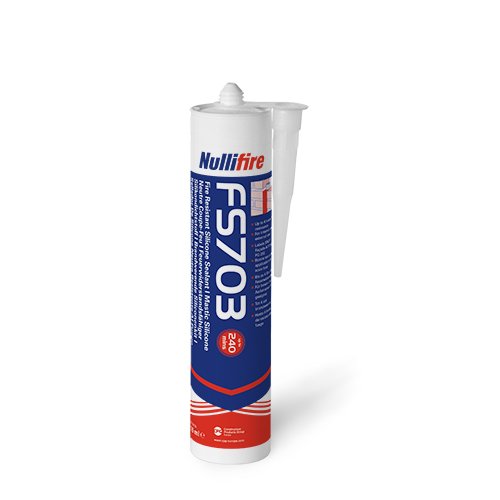
FS703 Fire Resistant Silicone Sealant
Ideal for sealing movement joints where a fire rating is required.
FS703 is a low modulus, neutral cure, silicone sealant, suitable for linear gaps sealing in order to reinstate the fire performance in compartment walls and floors. Suitable for fire seal joints in compartment walls and floors, static linear joints (masonry to masonry/rigid wall/rigid floor/flexible wall) and window & door joints (masonry to timber/steel)
-
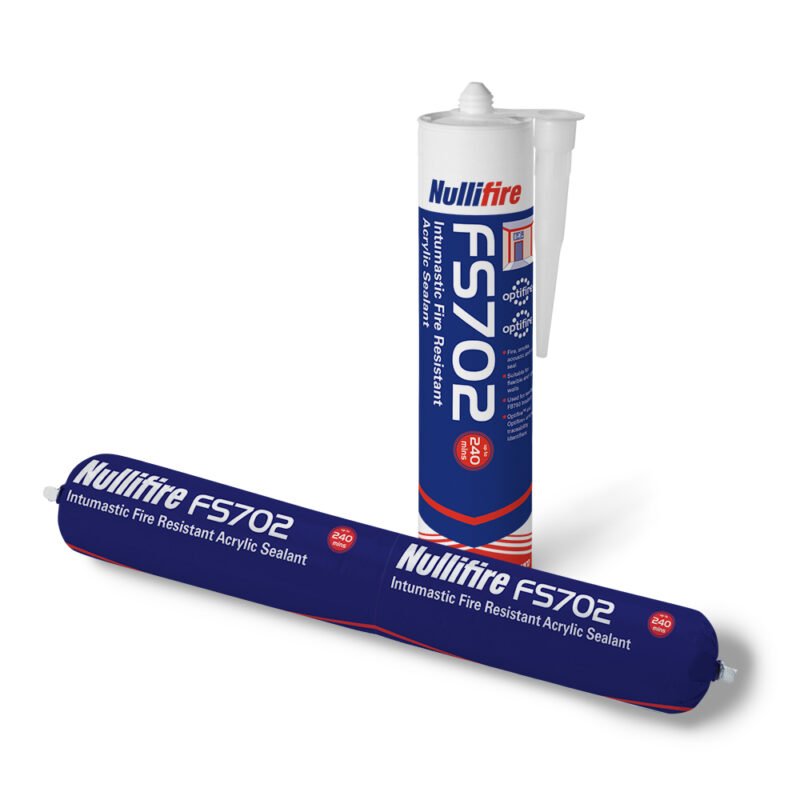
FS702 Intumastic Fire Resistant Acrylic
A water based acrylic sealant which cures to give a firm but flexible fire seal. Used to repair damage or bond to FB750 Intubatt.
FS702 Intumastic is suitable for use in various construction joints oering up to 30% movement capability whilst providing an excellent acoustic and air seal. It is suited for use around non-combustible services, cables, rock fibre insulated non-combustible pipes, using a minimum depth of 25 mm
-
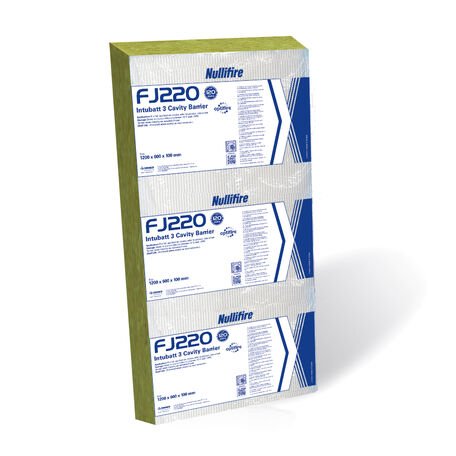
Nullifire FJ220 Intubatt 3 Cavity Barrier
FJ220 is a rock fibre compressible slab, with an ablative coating to provide a fire and smoke seal. We offer both single and double coated versions. FJ220 is supplied pre-configured, ablative coated and factory cured.
Price range: £1.56 through £50.12